Cognitive Biases
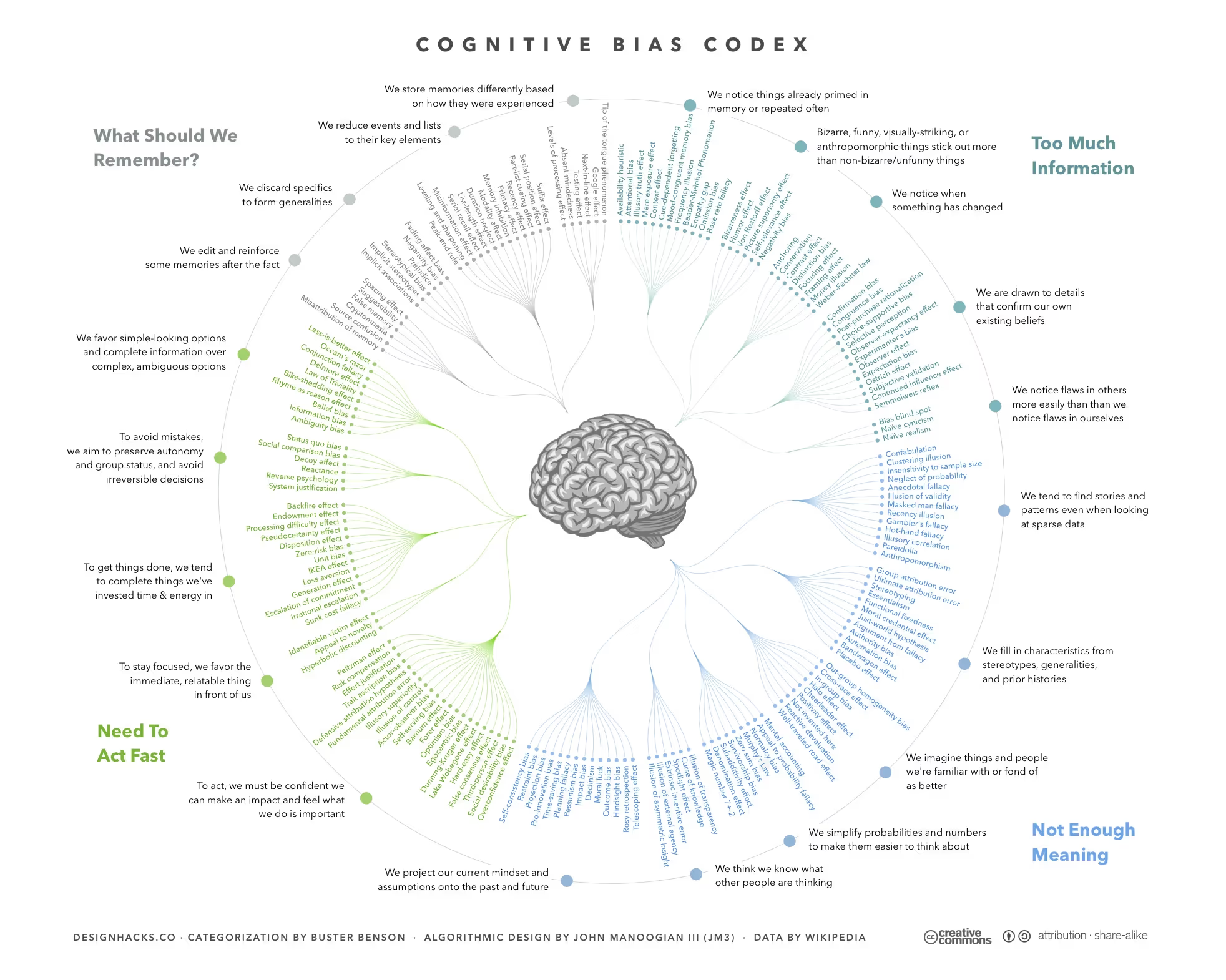
A working framework for categorizing cognitive biases: by cognitive process, decision stage, and emotion, plus practical ways to catch and counter them.
On this page
also see: Fallacies
-
References
-
The spotlight effect -> People are seldom interested in you and your actions.
-
Primacy Effect -> we put more weight on sequence of attributes we know about a person or object.
Categorizing biases can be done in multiple ways, each providing a different perspective on understanding and addressing biases. Achieving full knowledge of biases involves a comprehensive approach that considers these various categorizations. Here are the main ways to categorize biases and recommendations for each:
1. By Cognitive Processes
Description: This categorization focuses on the cognitive mechanisms behind biases.
- Attention Biases: How we focus our attention.
- Interpretation Biases: How we interpret information.
- Memory Biases: How we recall and remember information.
Recommendation: Use this categorization to understand how biases affect different stages of information processing. It's particularly useful for improving metacognitive awareness and for targeted interventions in specific cognitive areas.
2. By Decision-Making Stages
Description: Categorizes biases based on where they occur in the decision-making process.
- Heuristic-based Biases: Simplified decision-making strategies.
- Motivational Biases: Biases driven by desires and emotions.
- Outcome Biases: Judging decisions based on their outcomes.
Recommendation: This approach helps in refining decision-making frameworks and is practical for those looking to improve rational decision-making in personal and professional settings.
3. By Social Influences
Description: Focuses on biases that arise from social interactions and cultural contexts.
- Group Dynamics: Biases in group settings.
- Cultural Biases: Biases influenced by cultural norms and values.
Recommendation: Use this categorization to understand biases in social and organizational contexts. It's beneficial for leaders, team members, and anyone involved in multicultural settings.
4. By Emotional Influences
Description: Considers how emotions and moods influence biases.
- Affective Biases: Biases driven by emotional states.
- Stress and Anxiety: Biases arising from stress or anxiety.
Recommendation: This approach is useful for personal development and mental health professionals, as it emphasizes the emotional components of biases.
5. By Behavioral Outcomes
Description: Focuses on the impact of biases on behaviors and decisions.
- Risk Perception: How we perceive and respond to risk.
- Economic Decision-Making: Biases affecting financial and economic choices.
Recommendation: Ideal for those in fields like finance, economics, and risk management, where understanding the behavioral impacts of biases is crucial.
6. By Temporal Influences
Description: Looks at how biases change over time or with respect to time.
- Present vs. Future: Biases in valuing present versus future outcomes.
- Recency and Primacy Effects: Biases based on the timing of information.
Recommendation: Use this to improve long-term planning and time management, particularly in project management and strategic planning contexts.
7. By Contextual Influences
Description: Examines how biases are influenced by situational or environmental contexts.
- Situational Biases: Biases specific to certain situations.
- Environmental Influences: Biases influenced by environmental factors.
Recommendation: This is helpful for understanding situational awareness and adapting to different environments, useful in fields like marketing, design, and ergonomics.
Comprehensive Approach
To achieve full knowledge of biases, a comprehensive approach that integrates multiple categorizations is recommended. Here's a step-by-step plan:
- Start with Cognitive Processes: Understand the basic mechanisms of biases.
- Move to Decision-Making Stages: Apply this knowledge to refine your decision-making processes.
- Incorporate Social Influences: Learn how social contexts and cultural norms affect biases.
- Understand Emotional Influences: Recognize the role of emotions in shaping biases.
- Examine Behavioral Outcomes: Focus on how biases impact behaviors and decisions.
- Consider Temporal Influences: Learn how biases can change over time.
- Contextual Influences: Adapt strategies based on specific situations and environments.
Recommended Resources
- Books: "Thinking, Fast and Slow" by Daniel Kahneman, "Predictably Irrational" by Dan Ariely.
- Online Courses: Courses on cognitive biases from Coursera or edX.
- Journaling and Self-Reflection: Keep a journal to track your biases and reflections.
- Feedback and Peer Review: Regularly seek feedback to identify and mitigate biases.
Practical Implementation
- Weekly Learning Sessions: Dedicate time each week to learn about different biases.
- Monthly Reviews: Reflect on decisions and identify biases.
- Quarterly Feedback Sessions: Get feedback from peers or mentors.
- Daily Mindfulness Practices: Enhance self-awareness through mindfulness.
- Reflective Journaling: Track and reflect on biases regularly.
By integrating these various categorizations and approaches, you can develop a thorough understanding of cognitive biases and effectively improve your metacognitive skills and decision-making processes.
Improving the "Awareness & Perception -> Learn -> Plan -> Action -> Feedback -> Reflect and Adjust" cycle involves a systematic approach to understanding and mitigating cognitive biases. Here's a structured plan to learn cognitive biases within this framework:
1. Awareness & Perception
Goal: Become aware of biases and how they influence your perception.
-
Educate Yourself: Start by learning about common cognitive biases through reputable sources (books, articles, courses). Key resources include:
- Thinking, Fast and Slow by Daniel Kahneman
- Predictably Irrational by Dan Ariely
- Online courses on platforms like Coursera or edX
-
Self-Assessment: Use tools like bias quizzes and self-assessment surveys to identify which biases you are most prone to.
-
Mindfulness: Practice mindfulness and self-awareness techniques to become more conscious of your thought processes.
2. Learn
Goal: Deepen your understanding of specific cognitive biases and how they manifest.
-
Categorize Biases: Group biases by cognitive processes (attention, interpretation, memory), decision-making stages, and emotional influences to understand their impacts more systematically.
-
Case Studies: Study real-life examples and case studies where cognitive biases played a significant role in decisions.
-
Discussion and Debate: Engage in discussions and debates with others to see different perspectives and how biases can influence various viewpoints.
3. Plan
Goal: Develop strategies to mitigate identified biases.
-
Bias Mitigation Techniques: Learn techniques to counteract biases, such as:
- For Confirmation Bias: Actively seek out disconfirming evidence.
- For Anchoring Bias: Delay making decisions until sufficient information is gathered.
-
Decision-Making Frameworks: Implement structured decision-making frameworks (like decision matrices or cost-benefit analyses) to reduce the impact of biases.
-
Setting Goals: Set specific, measurable goals for reducing the influence of biases in your decision-making processes.
4. Action
Goal: Apply learned strategies in real-life situations.
-
Mindful Decision-Making: Practice mindful decision-making by taking deliberate pauses to consider potential biases before making choices.
-
Accountability Partners: Work with a colleague, mentor, or coach who can provide an external perspective and help you identify when biases may be influencing your decisions.
-
Regular Practice: Integrate bias mitigation techniques into your daily routines and decision-making processes.
5. Feedback
Goal: Gather feedback on the effectiveness of your strategies.
-
Feedback Loops: Create feedback loops by regularly reviewing the outcomes of your decisions and assessing the role of biases.
-
Peer Review: Involve peers or mentors to review your decisions and provide feedback on potential biases.
-
Journaling: Maintain a decision journal to track decisions, outcomes, and reflections on potential biases.
Practical Implementation
Here's how you can implement this plan:
- Weekly Learning Sessions: Dedicate time each week to learn about a new cognitive bias.
- Monthly Reviews: Conduct monthly reviews of your decisions and identify any biases that influenced them.
- Quarterly Feedback Sessions: Schedule quarterly sessions with a mentor or coach to review your progress and get feedback.
- Daily Mindfulness Practices: Include mindfulness exercises in your daily routine to enhance self-awareness.
- Reflective Journaling: Keep a journal to note instances where you identified and counteracted biases, and reflect on these regularly.
By following this structured approach, you can systematically improve your awareness and perception, learn about cognitive biases, plan and implement mitigation strategies, gather feedback, and adjust your behavior to enhance your metacognitive abilities.