Ancient Indian Knowledge
A roadmap into Indian philosophy: the Āstika and Nāstika schools, the Purusharthas, and the sources worth starting with.
On this page
Road Map
- I want to get an introduction to Indian schools of thought.
- Indological system → I need to be cautious about history, dates, and their influence over our darshanas.
- M. Hiriyanna's Essentials of Indian Philosophy
- Direndra Mohan Datta's Introduction to Indian Philosophy
- M. Hiriyanna's Outline of Indian Philosophy
- Dr. S. Radhakrishnan's Indian Philosophy, Vol 1 and 2
- Dr. Surendranath Dasgupta's five volume work on History of Indian Philosophy (here)
- The Complete Works of Swami Vivekananda
- If you are comfortable reading Sanskrit directly then: Sarva-darshana Sangraha by Sayanacharya, Siddhanta Lesha Sangraha of Appayya Dikshita, and Vedanta-Sara of Sadananda.
- Shiva Sutras
- Indian Knowledge Systems
- Indological system → I need to be cautious about history, dates, and their influence over our darshanas.
We have 6 Pramanas
- Pratyaksha → through self-experience, direct perception
- Anumaan → through logical conclusions, inference or indirect perception
- Upmaan → examples or similarities/analogy
- Arthapatti → through factual extrapolation, postulation, derivation from circumstances
- Anupalabdi → through negative conclusion, non-perception, absence of proof
- Sabda → through written & spoken words from aaptpurush/experts
Just realized the following 6 are major orthodox philosophical views taking the Vedas as their base.
Āstika
- Sankhya
- Kapil Muni
- Yog
- Mimansa
- Nayay
- Vaisheshik
- Vedant
Nastika
- Charvaka
- Ajivika
- Buddhism
- Jainism
Others From Writings of Madhavacharya
Shastras and Rituals
Pramana → pra is before/forth and mana is measurement.
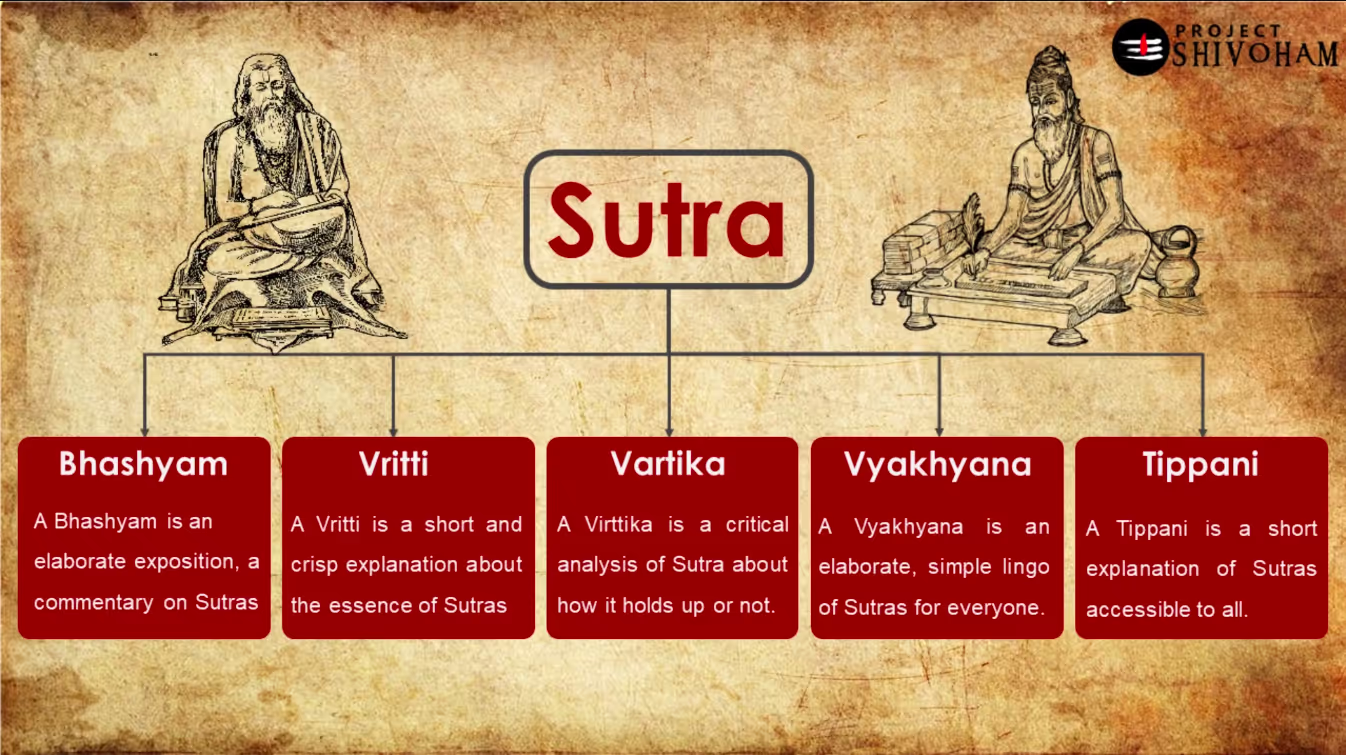
Shiva Sutras are first to be observed before shruti.
There are six types of Shastras:
- Shruti
- Smruti
- Puranam
- 18 by Ved Vyas
- Ithihasam
- Mahabharat & Ramayan
- Agamam
- There are 77 Sakti Aagamas, 28 Siva Aagamas and 108 Vishnu Agamas.
- Siddhantam
- In the field of Astronomy & Cosmology there are 18.
Sanskrit.
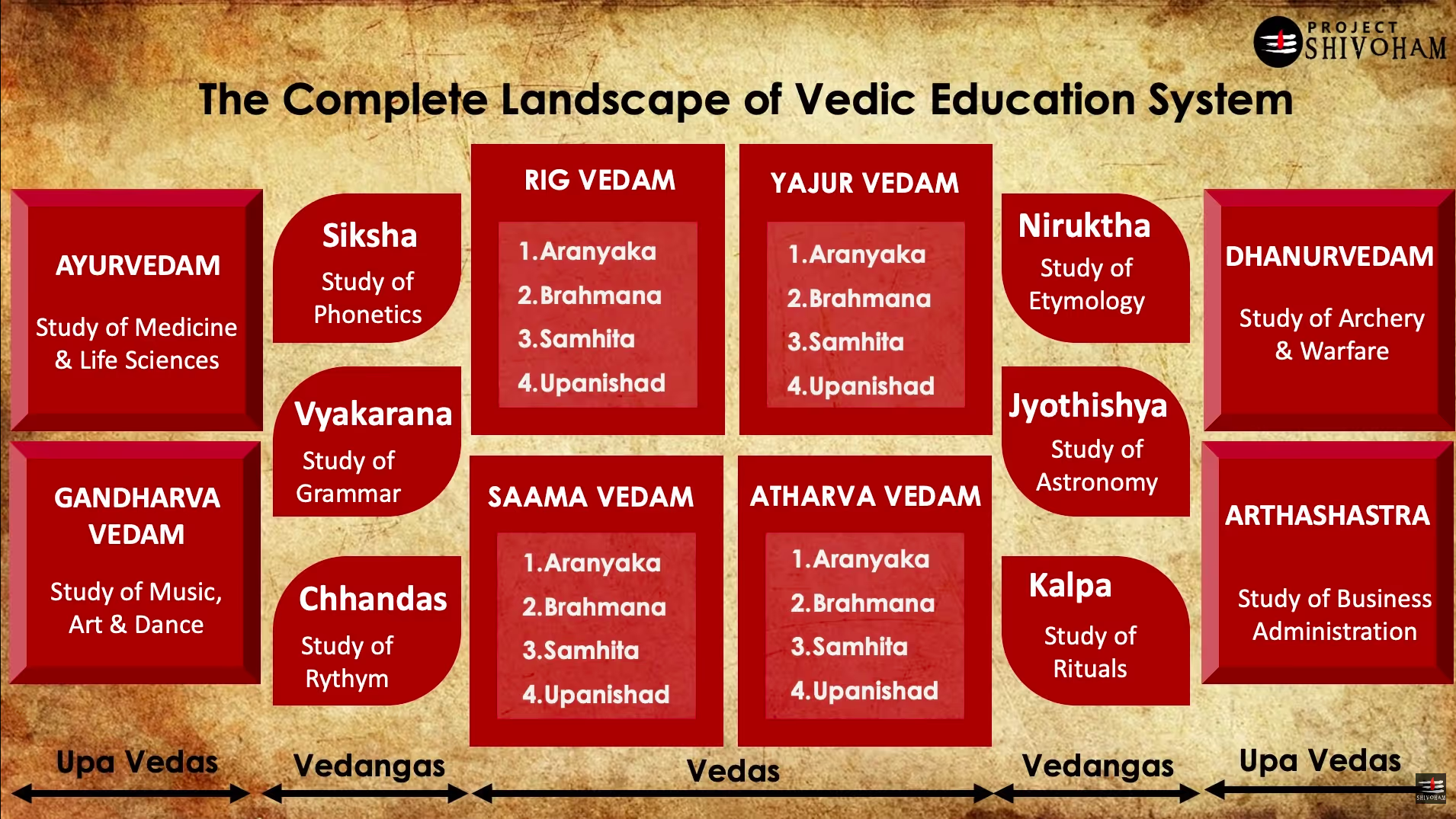
Jyothishya
Aims of Man (Purpose)
Purushartha
Introduction:
- Purushartha by Dr Bhagwan Das
- Purushartha Chatustay
- Great sages here
Dharma
All dharma shastras are rooted in dharma sutras which are part of kalpa vedanga. Dharma is which holds or which sustains: justice, lawful, sustainability.
- Yājñavalkya Smṛti
- There are types of them, and the one that still works flawlessly should be svadharma.
- Manu, Vishnu, Parasar, Brihaspati, Katyayana, Gutama, Vyasa and Narada Smrti, Tirukkural.
- Dharmasutras → Vasishtha, Gautama, Baudhāyana, Āpastamba, Hārīta, Hiraṇyakeśi, Vaikhānasa, Viṣṇu, Śaṅkha-Likhita, Auśanasa.
Artha
The Arthashastra of Kauṭilya, the Kamandakiya Nitisara, Brihaspati Sutra, and Sukra Niti, Artha Sangraha, Vidur Niti.
Kama
Desire, enjoyment, relishness. The Kamasutra of Vātsyāyana is most well known. Jayamangala by Yashodhara, Koka Shastra by Koka Pandit. Other texts include Ratirahasya, Smaradipika, Ratimanjari, Ratiratnapradipika, Ananga Ranga, among others: Manasollasa, Kandarpa Sutra by Vatsyayana Mallanaga, Kama Puraanam, Smara Pradipa by Gunakara, Gandharva Tantra, Kam Kunj, Paururav, and the Śṛṅgārarasaprabandhadīpikā, a Kama Shastra Granth.
Moksha
Major treatises on the pursuit of moksha include the Upanishads, Vivekachudamani, Bhagavad Gita, and the sastras on Yoga, in particular the fourth portion of Patanjali's Sutras (Yog Sutras), Brahma Sutras.
Resources
- Vedic Heritage
- Wisdomlib.org
- Mahakavya.com
- Archive.org
- Sanskritdocuments
- Hindu Online
- Dayanand Saraswati for Samhita
- Vedic Scriptures
- Savar Vigyan
- Lal Kitab
- Astadhayi
- Upnishad
- Vaital Pachisi
- Viman Sastra
- Samudrik Sastra
- Ras Ratnakar
- Vigyan Bhairav Tantra
- Atharva Ved
Ayurveda
https://www.youtube.com/@TheSanskritChannel/videos
https://asmaherbals.co.in/ayurveda-books-free-download/
Resources
- Ayurved ks Itihas
- Padharth Vigyan
- Charak Samhita
- Susrut Samhita
- Astanga Sangraha
- Astanga Hridayam
- Anant Dharmadhikari Sir
- chakradatta
- Manu Kothari
- Arogya Vardhini
- Sukhsma Ausdhi Kalpana
- Ayurved Panchkarma Vigyan by haridas shridhar
- Panchbhautik Atmasamvad, Shailesh Mali
- Nighantratanakar
- Rastaringini
- Kamshastram Ramanand sagar
- Kamkunjata
- Anantrang
- Panchkarma bodh
- Ayurvedic Stri Vigyan
- Shalakya Vigyan
- Kasyap Samhita
- Ayurved jadibuti rahasya
- Dravyagun vigyan
- Dr. L. Mahadevan
- Mera Ahar Mera svasthya
- ved Ramesh Nanal
- Sahastra Yogam
- Adhijanan Sastra
- Sharangdhar samhita
- Prasuti Trantra
- Sanskrit Shikshan Sarni
- Panchsayhak
- Kelikautuhalam
- RatiRahasya
- Ratiratnapradipika
- Tamakswas
- Yashvant Chikitsa
Books
The Five-fold Structure of Ayurvedic Knowledge
- Sutras are fundamental and general Instructions.
- Nidana is finding root cause -> diagnosis
- Sareer Sthana -> anatomy of human body to minutest details
- Chikitsa -> deals with identifying, formulating and preparation of medicines
- Kalpa Sthana -> Analyzing the impact of poision and preparing the antidotes.